
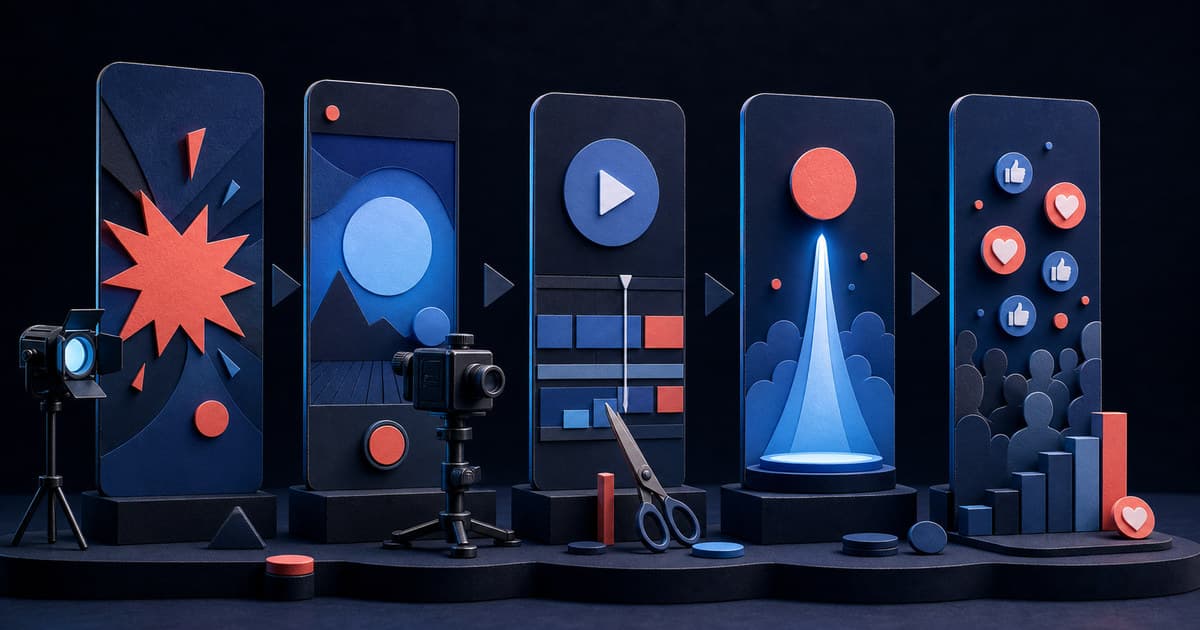
The Rise of Short-Form Video Marketing: What You Need to Know
Short-form video is dominating social media. Learn the latest stats, content strategies, production tips, and how to measure ROI from TikTok, Reels, and Shorts.
At a glance
Update brief
The change, the exposure, and the next sensible move.
- 01What changed
- Short video has become a major discovery format across TikTok, Reels, and Shorts.
- 02Who is affected
- Brands seeking reach with demonstrable expertise, products, or processes can benefit most.
- 03What to do now
- Choose one platform, study strong examples, and publish several simple videos consistently.
- The Numbers Behind the Movement
- Platform Growth
- Consumer Behaviour
- Why It Works
- Building a Content Strategy
- Define Your Content Pillars
- Know Your Audience on Each Platform
- Plan Your Posting Cadence
- Production Tips That Actually Matter
- The First Two Seconds
- Lighting and Audio
- Framing and Movement
- Captions Are Mandatory
- Repurposing Content Effectively
- The Repurposing Framework
- Platform-Specific Adjustments
- Building a Content Library
- Measuring Engagement and Performance
- Metrics That Matter
- Metrics That Don't Matter as Much as You Think
- Tracking ROI
- Common Mistakes to Avoid
- Getting Started: Your First 30 Days
- The Opportunity Is Now
Short-form video has gone from an emerging trend to the single most important content format in digital marketing. In 2026, businesses that aren't producing short-form video are leaving significant reach, engagement, and revenue on the table.
But creating effective short-form video isn't as simple as pointing your phone at something and hitting record. There's a real strategy behind the content that drives results, and understanding it is the difference between videos that build your business and videos that waste your time.
The Numbers Behind the Movement
Before diving into strategy, it's worth understanding the scale of what's happening.
Platform Growth
- TikTok does not publish global monthly active user counts on a regular schedule; third-party estimates in 2026 put it somewhere between 1.8 and 2.2 billion, which tells you the direction of travel more reliably than any single number
- Instagram Reels account for a large and growing share of time spent on the platform, and Meta has repeatedly said Reels is where its recommendation investment goes
- YouTube Shorts passed 200 billion daily views globally in 2025, up from the 70 billion YouTube reported in 2023 — the fastest-growing format on the platform
- LinkedIn has entered the short-form space and now surfaces video prominently in the feed
Consumer Behaviour
Short-form video isn't just entertainment — it's reshaping the entire purchase journey. Younger consumers in particular increasingly prefer to learn about a product by watching a short video rather than reading about it, and a meaningful share act on what they see without leaving the app. For Canadian businesses, that makes short-form video a discovery channel, not just a brand-awareness one.
Why It Works
Short-form video succeeds because it aligns with how people actually consume content in 2026: quickly, on mobile, and with a preference for visual storytelling over text. The format rewards creativity and authenticity over budget and production value, which levels the playing field for small and medium-sized businesses.
Building a Content Strategy
Effective short-form video marketing starts with strategy, not production. Before you create a single video, you need clarity on a few fundamentals.
Define Your Content Pillars
Choose three to five content themes that align with your business expertise and your audience's interests. For example, a digital marketing agency might use:
- Quick marketing tips and how-tos
- Behind-the-scenes of client projects (with permission)
- Industry news and trend commentary
- Tool reviews and tech recommendations
- Team culture and company personality
These pillars give you a framework that ensures variety while maintaining relevance. They also make content planning dramatically easier because you're not starting from scratch every time.
Know Your Audience on Each Platform
The same person behaves differently on TikTok than on Instagram or YouTube. Understand the nuances:
- TikTok — Audiences expect entertainment value, trends, and authenticity. Humour and personality go far. Discovery-driven; most views come from non-followers.
- Instagram Reels — Slightly more polished aesthetic expected. Audiences are often already familiar with your brand. Good for building on existing relationships.
- YouTube Shorts — Audiences are in a learning mindset. Educational and informative content tends to perform well. Strong gateway to your long-form YouTube content.
- LinkedIn Video — Professional audience looking for industry insights, career content, and business lessons. Less casual, more substance.
Plan Your Posting Cadence
Consistency matters more than volume. A realistic schedule you can maintain is far better than an ambitious one you'll abandon after two weeks. For most businesses, three to five videos per week across one to two platforms is a sustainable starting point.
Production Tips That Actually Matter
You don't need expensive equipment, but you do need to understand what makes short-form video effective.
The First Two Seconds
Your video lives or dies in the first two seconds. If you don't capture attention immediately, viewers will scroll past. Effective hooks include:
- A bold statement or surprising fact
- A question that resonates with your target audience
- Visual movement or an unexpected image
- Text overlay that creates curiosity
Avoid lengthy introductions, logo animations, or "Hey guys!" openings. Get to the point instantly.
Lighting and Audio
Two things that separate amateur-looking content from professional-feeling content:
- Lighting — Natural window light or a simple ring light makes an enormous difference. Avoid overhead fluorescent lighting and backlit situations.
- Audio — Clear audio is non-negotiable. Use a clip-on lavalier microphone (available for under $30) for talking-head content. For content with music or voiceover, ensure the audio mix is clean.
Framing and Movement
- Shoot vertically (9:16 aspect ratio) for all short-form platforms
- Keep the subject centred and within the safe zones (away from the edges where platform UI elements appear)
- Use movement — either move the camera or have your subject move. Static, talking-head content can work but benefits from jump cuts and visual variety
Captions Are Mandatory
A significant percentage of short-form video is watched without sound. Always include captions. Most editing tools (CapCut, Descript, the platforms themselves) offer auto-captioning. Review for accuracy, and consider styling your captions to match your brand.
Repurposing Content Effectively
One of the greatest advantages of short-form video is its repurposing potential. A single piece of content can work across multiple platforms and formats.
The Repurposing Framework
Start with your strongest content format and work outward:
- Long-form video or podcast → Extract the most compelling 30-60 second segments for Reels, Shorts, and TikTok
- Blog post → Identify the key takeaways and create a video for each one
- Client result or case study → Create a before-and-after video or a quick results breakdown
- Live stream or webinar → Pull the best moments for short-form clips
Platform-Specific Adjustments
When repurposing across platforms, don't just repost the exact same video everywhere. Make small adjustments:
- Adjust captions and hashtags for each platform's audience
- Modify the hook if what works on TikTok doesn't land on LinkedIn
- Use platform-native features (TikTok effects, Reels templates, YouTube Shorts creation tools) when possible
- Post natively on each platform rather than sharing links between them — native uploads always receive better distribution
Building a Content Library
Organize your video content by topic, format, and performance. This library becomes increasingly valuable over time. High-performing concepts can be revisited and updated. Evergreen content can be reshared periodically. And your library of raw footage becomes a resource for future compilations and retrospectives.
Measuring Engagement and Performance
Not all metrics matter equally. Focus on the ones that actually indicate business impact.
Metrics That Matter
- Watch time and completion rate — This tells you whether your content is genuinely engaging. A video that 80% of viewers watch to completion is far more valuable than one with higher total views but a 20% completion rate.
- Shares and saves — These are the strongest signals of content value. When someone shares or saves your video, they're telling the algorithm (and you) that this content is worth revisiting.
- Profile visits and follows — Track how effectively your videos drive people to learn more about your business.
- Website clicks and conversions — Ultimately, short-form video should drive business results. Use UTM parameters and platform analytics to track the path from video to conversion.
Metrics That Don't Matter as Much as You Think
- Raw view counts — Views are vanity metrics unless they lead to meaningful engagement or business outcomes
- Likes — Low-effort engagement that doesn't strongly correlate with business results
- Follower count — A smaller, engaged audience is more valuable than a large, passive one
Tracking ROI
Measuring the ROI of short-form video requires a broader view than direct attribution alone. Consider:
- Brand awareness lift — Are more people searching for your brand name?
- Content-assisted conversions — Did customers interact with your video content at any point in their journey, even if they converted through a different channel?
- Customer acquisition cost — Is your overall cost to acquire a customer decreasing as your video presence grows?
- Organic reach value — What would it cost to achieve the same reach through paid advertising?
Common Mistakes to Avoid
After working with businesses across various industries, these are the mistakes we see most often:
- Overthinking production quality — Authenticity outperforms polish on short-form platforms. Don't let perfectionism prevent you from posting.
- Ignoring trends entirely — You don't need to jump on every trend, but participating in relevant ones significantly boosts discovery.
- Being too promotional — The 80/20 rule applies: 80% value-driven content, 20% promotional. Audiences will tolerate promotion from creators who consistently provide value.
- Inconsistency — Posting five videos one week and none for the next three kills your momentum with both algorithms and audience expectations.
- Not engaging with comments — Comments are a gift. Respond to them. They boost your content's distribution and build community.
- Ignoring analytics — Review your performance data weekly. Double down on what works and drop what doesn't. Let the data guide your content strategy, not assumptions.
Getting Started: Your First 30 Days
If you're new to short-form video, here's a practical 30-day plan:
Week 1: Choose one platform. Watch 50 videos from businesses in your industry that are doing it well. Note what hooks, formats, and topics they use. Set up your profile and branding.
Week 2: Create and post your first three to four videos. Focus on simple formats — talking to camera with a useful tip, a quick behind-the-scenes look, or a before-and-after. Don't aim for perfection. Aim for published.
Week 3: Review what performed best. Create four to five more videos, leaning into what worked. Experiment with one trending format or audio.
Week 4: Establish your ongoing cadence. Begin planning content in batches (filming multiple videos in one session). Start engaging actively with your community and other creators in your space.
The Opportunity Is Now
Short-form video marketing rewards early and consistent action. The businesses that build a presence now — while many of their competitors are still hesitating — will have a significant advantage in audience, authority, and algorithmic favour.
You don't need a big budget. You don't need a production team. You need a clear strategy, a willingness to start before you feel ready, and the discipline to show up consistently. The platforms are actively prioritizing video content and rewarding creators who keep audiences engaged. That's an opportunity that every business should be taking seriously.
Looking for professional social media services?
Explore the related service or bring us the specific challenge you are trying to solve.
Tanya Oberg
Social Media Strategist
Tanya specializes in building social media strategies that convert followers into customers. With a background in brand communications and content marketing, she helps businesses find their voice across every platform.
Related Articles

Google's March 2026 Core Update: What It Means for Your Rankings
Breaking down Google's latest core algorithm update, which sites are affected, and what you need to do to maintain or recover your search rankings.

How AI Is Changing Digital Marketing in 2026
Explore how artificial intelligence is transforming digital marketing from content creation and ad targeting to personalization and predictive analytics.

Using AI Tools for Content Creation: A Practical Guide
A practical guide to the best AI tools for content creation in 2026, including writing, image generation, video, and how to maintain quality and brand voice.